Cavalla & Luxonis: Forklift Autonomy Powered by OAK
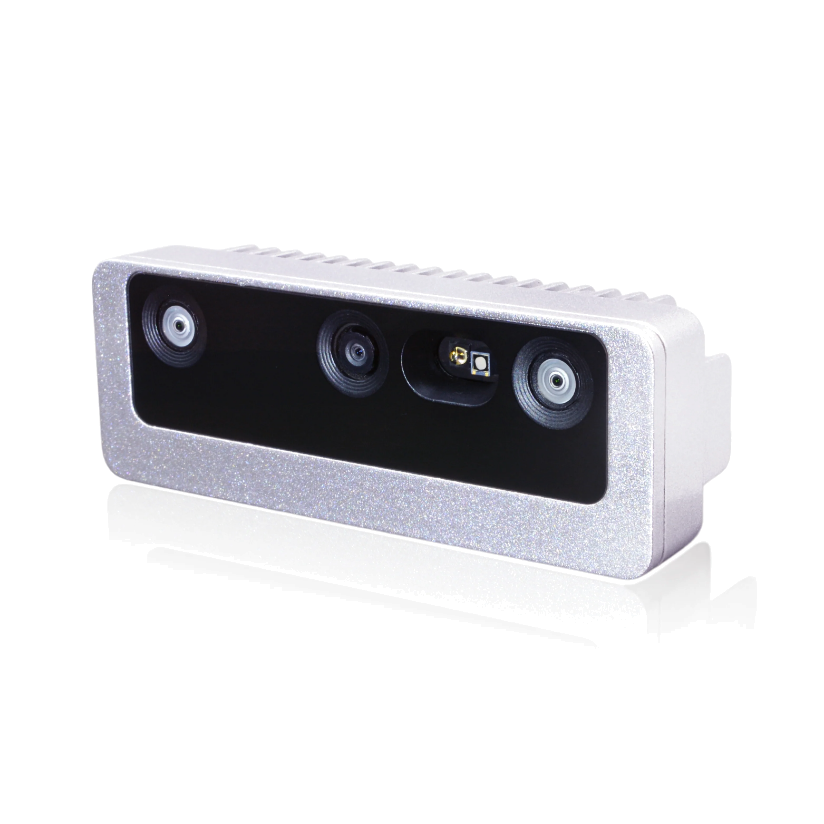
Cavalla is building the world’s fastest, safest, and most reliable autonomous forklifts. Their objective is to create material handling machines that map their surroundings, avoid unexpected obstacles, and complete complex logistical tasks entirely without human intervention.
To achieve this level of autonomy, perception is everything. However, deploying robotics in heavy industrial environments requires vastly different hardware than operating in a controlled lab. Warehouses are highly dynamic spaces where equipment is subjected to continuous physical stress, causing standard perception systems to fail quickly.
For Cavalla, the algorithms were only half the battle. Finding a vision system that could physically survive the deployment and maintain calibration on the warehouse floor was a critical necessity.
The Challenge of Industrial Vision
A perception system mounted on a heavy-duty forklift must navigate multiple physical and optical variables simultaneously:
Severe Vibration: Heavy machinery naturally produces continuous, heavy vibration that can easily misalign stereo calibration or shake standard camera lenses out of focus.
Dust and Debris: Airborne particulate in industrial facilities quickly coats lenses and infiltrates unsealed electronic enclosures, degrading image quality and causing hardware shorts.
Varying Lighting: Forklifts constantly move between dimly lit aisles and glaringly bright loading docks, requiring rapid exposure adjustments.
Textureless Surfaces: Blank warehouse walls, concrete floors, and shrink-wrapped pallets make it incredibly difficult for standard stereo cameras to find matching features for accurate depth estimation.
Early in development, Cavalla faced critical durability issues with other camera options under these exact conditions. In material handling, if a sensor fails, the autonomous system halts, disrupting the entire warehouse workflow. They needed a camera capable of delivering precise spatial data while physically surviving the realities of the warehouse floor.
Why Cavalla Chose Luxonis
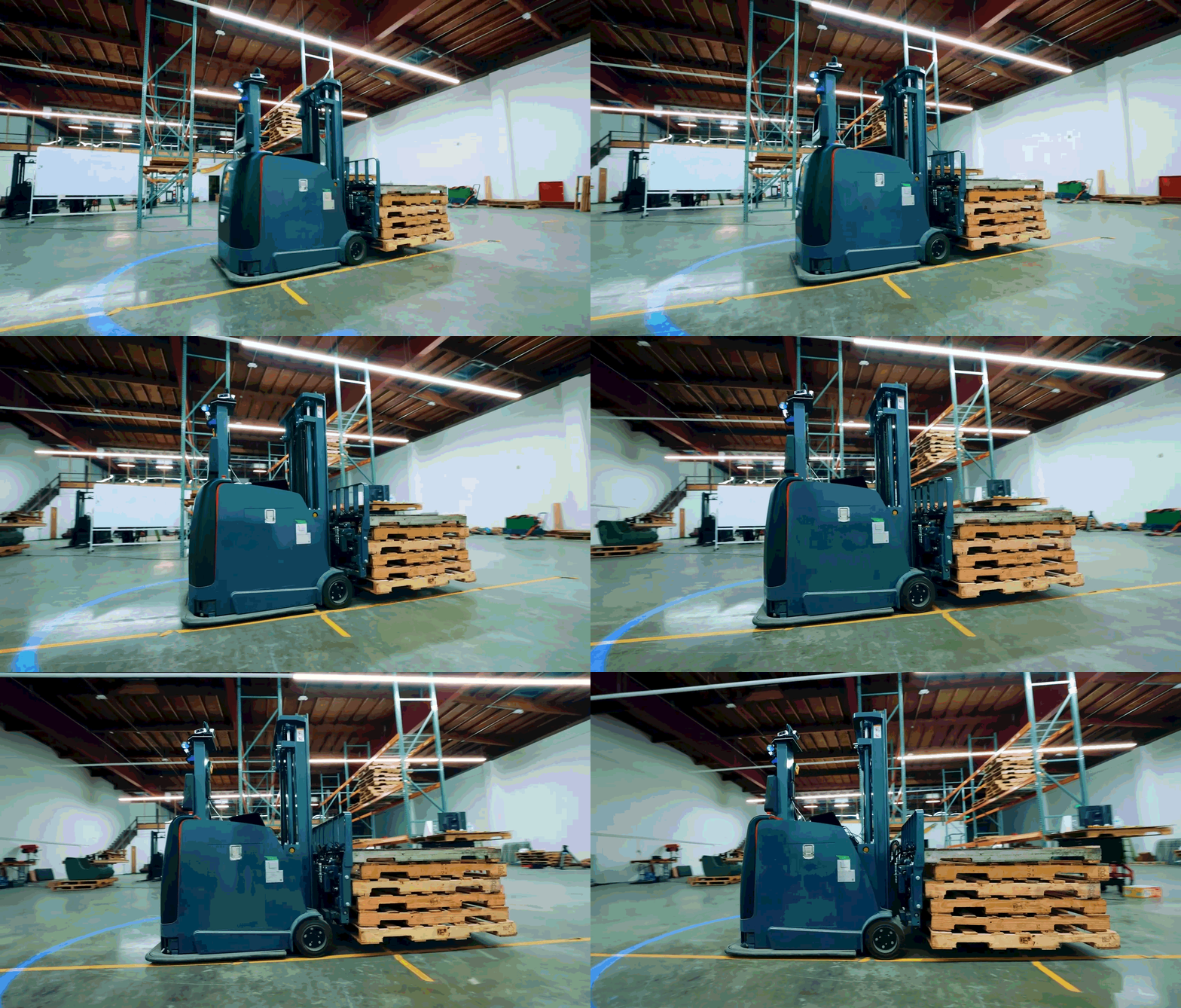
To solve these hardware failures, Cavalla replaced their fragile sensors with the OAK-D Pro W PoE (Global Shutter variant). The decision to scale with Luxonis was driven by three core factors: the rugged physical design, the depth image quality, and the flexibility of the DepthAI Open SDK.
1. Industrial-Grade Durability (IP65 & PoE)
The immediate benefit for Cavalla was hardware survival. Because this specific OAK camera features an IP65-rated sealed enclosure, the durability issues the team previously faced were completely eliminated. Furthermore, utilizing a Power-over-Ethernet (PoE) variant allowed Cavalla to use a single, locking, ruggedized cable for both power and high-bandwidth data. This is critical on a moving vehicle, as it prevents cable disconnection from vibration and shields the data stream from the heavy electrical noise generated by the forklift's motors.
2. Global Shutter for Motion and Vibration
Standard rolling shutter cameras capture images line-by-line, meaning rapid motion or heavy vehicle vibration causes the image to warp or tear (the "jello" effect). This destroys stereo depth accuracy. By utilizing the global shutter variant of the OAK-D Pro W, all pixels are captured simultaneously. This ensures the stereo pairs remain perfectly synchronized, delivering a pristine, distortion-free depth map even when the forklift is moving at top speed over uneven warehouse concrete.
3. Wide Field of View (W Variant)
Forklifts operate in tight, hazardous quarters. The "W" variant of the camera provides a 97-degree horizontal field of view, giving the vehicle the necessary peripheral vision to detect workers, racking systems, and other machinery operating in close proximity.
4. The Open SDK
Hardware is only useful if it can be integrated into the broader software stack. Cavalla heavily utilized the DepthAI Open SDK to access low-level camera controls and stream the depth data directly into their proprietary navigation algorithms without having to rewrite their existing architecture.
Architecture: Edge Compute in Action
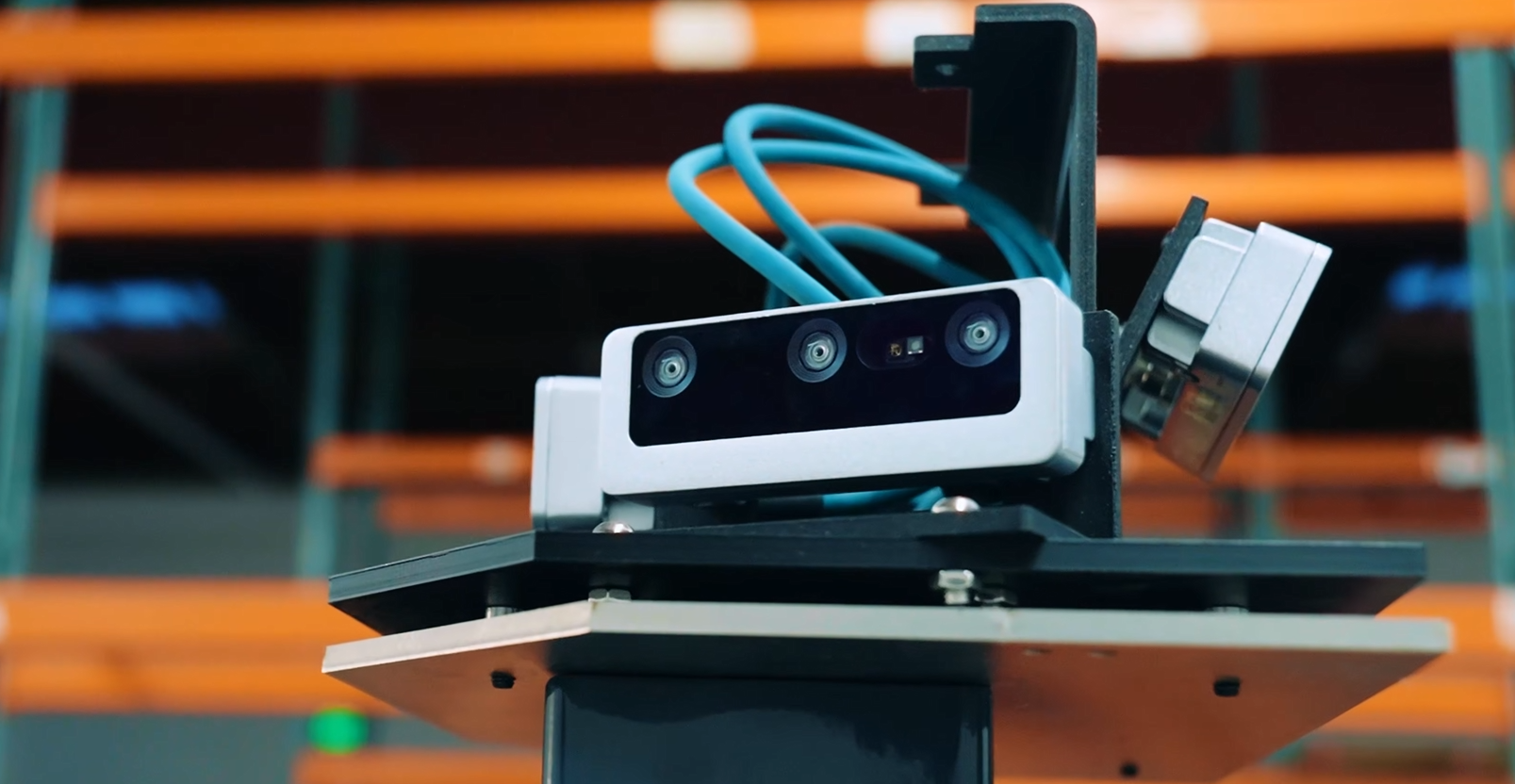
In Cavalla's hardware stack, the OAK cameras are not just supplementary—they serve as the main mapping sensors on the robot.
To optimize system performance and minimize latency, Cavalla engineered a highly efficient compute split. The OAK device runs the stereo depth estimation entirely on-board at the edge. By handling this computationally heavy task natively on the camera, the clean depth map is passed directly to the forklift's onboard host compute.
This frees up the forklift's main CPU/GPU to handle the complex, higher-level autonomy tasks: SLAM (Simultaneous Localization and Mapping), object detection, and instance segmentation. This architecture utilizes the OAK's edge capabilities perfectly, keeping the autonomous pipeline fast and responsive.
From Validation to the Warehouse Floor
Hardware validation for heavy robotics leaves no room for lab-only testing. To prove the sensor's viability, Cavalla mounted the OAK cameras directly onto a production forklift unit.
By operating the unit remotely on the floor, the engineering team evaluated the live depth image and compared it against other candidate sensors in real-time. Based on this direct, real-world testing, it was obvious that OAK was what Cavalla needed.
"We use Luxonis because with OAK cameras, you can build a high-quality, rugged, and reliable CV pipeline faster than you can with anyone else."
— Victor Boyd, Founder at Cavalla
Building the Future of Material Handling
Cavalla’s deployment demonstrates that true autonomy in industrial spaces requires hardware built specifically for the environment. By pairing IP-rated, global-shutter edge vision with their advanced onboard compute, Cavalla has eliminated sensor failure and successfully established themselves as the premier autonomous forklift solution on the market.