We're excited to announce that Luxonis cameras are now officially supported in NVIDIA Isaac Sim, bringing a new level of convenience and realism to robotics developers and researchers building next-generation autonomous systems.
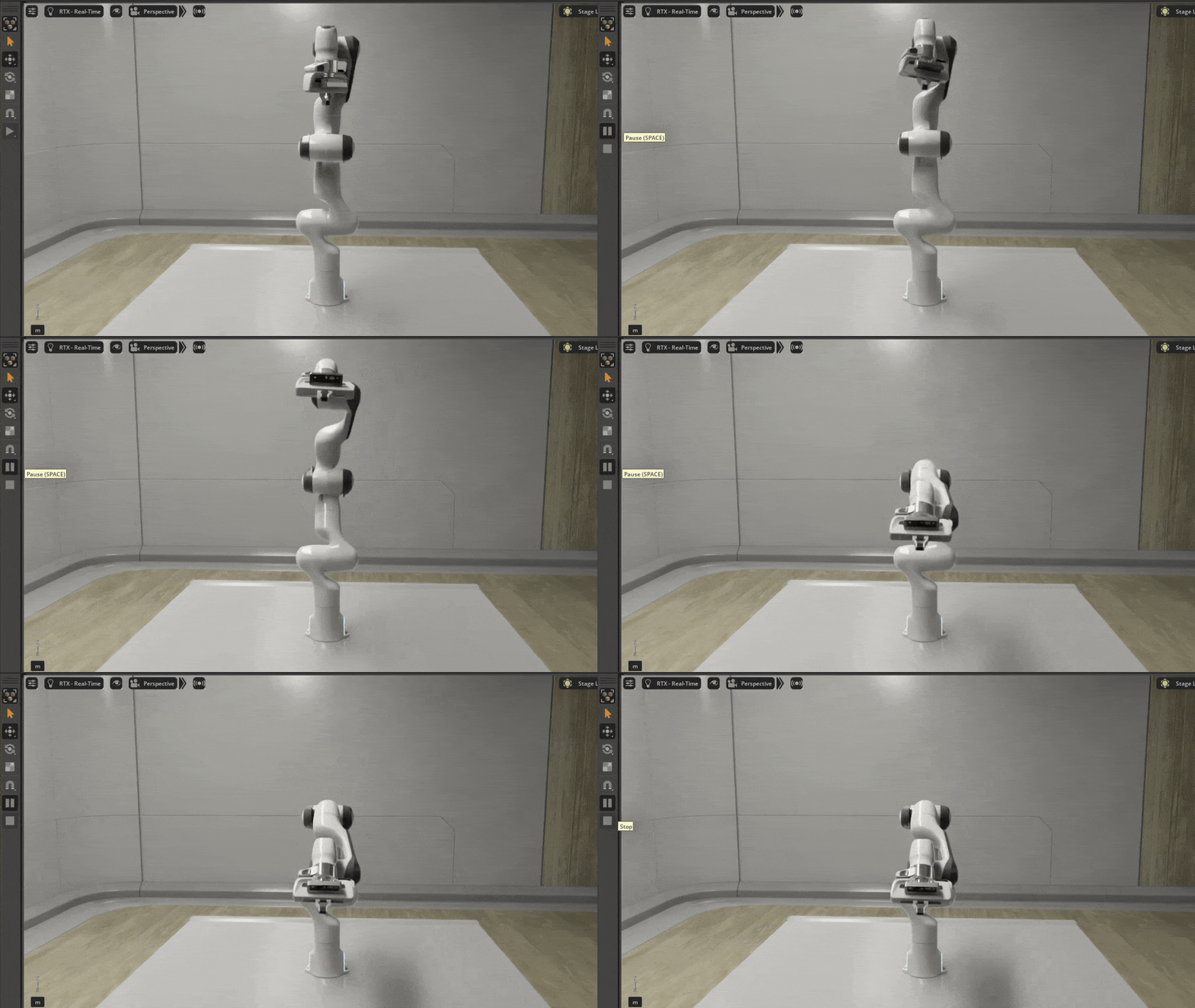
Bridging Simulation and Reality
As robotics teams increasingly rely on simulation to accelerate development, the accuracy of virtual sensors becomes critical. To address this, the Luxonis team developed and implemented virtual versions of our camera portfolio directly inside NVIDIA Isaac Sim, faithfully replicating the specifications and behavior of real Luxonis sensors.
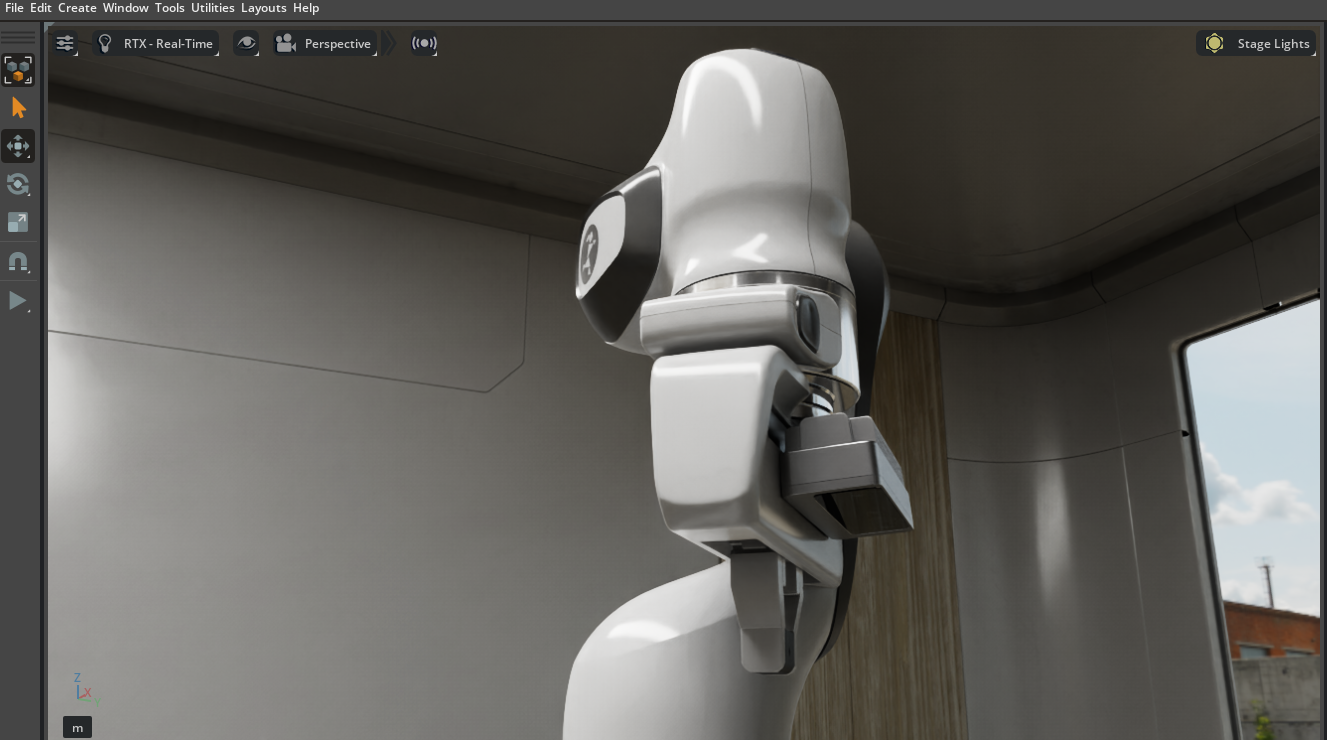
This means developers can now select and deploy Luxonis cameras directly within Isaac Sim and Isaac Lab—without the need to manually configure sensor models, camera parameters, or optical characteristics.
Getting started is simple. In Isaac Sim, navigate to Content Browser → Isaac Sim → Sensors → Luxonis → OAK4-D and drag oak4_d.usd into your scene. The camera is ready to use immediately, allowing you to start testing perception pipelines, evaluating camera placement, and generating synthetic data without any manual sensor configuration.
Faster Development, Less Setup
Traditionally, robotics teams using simulation environments have had to spend valuable engineering time recreating camera specifications, tuning parameters, and validating sensor behavior before they could begin testing.
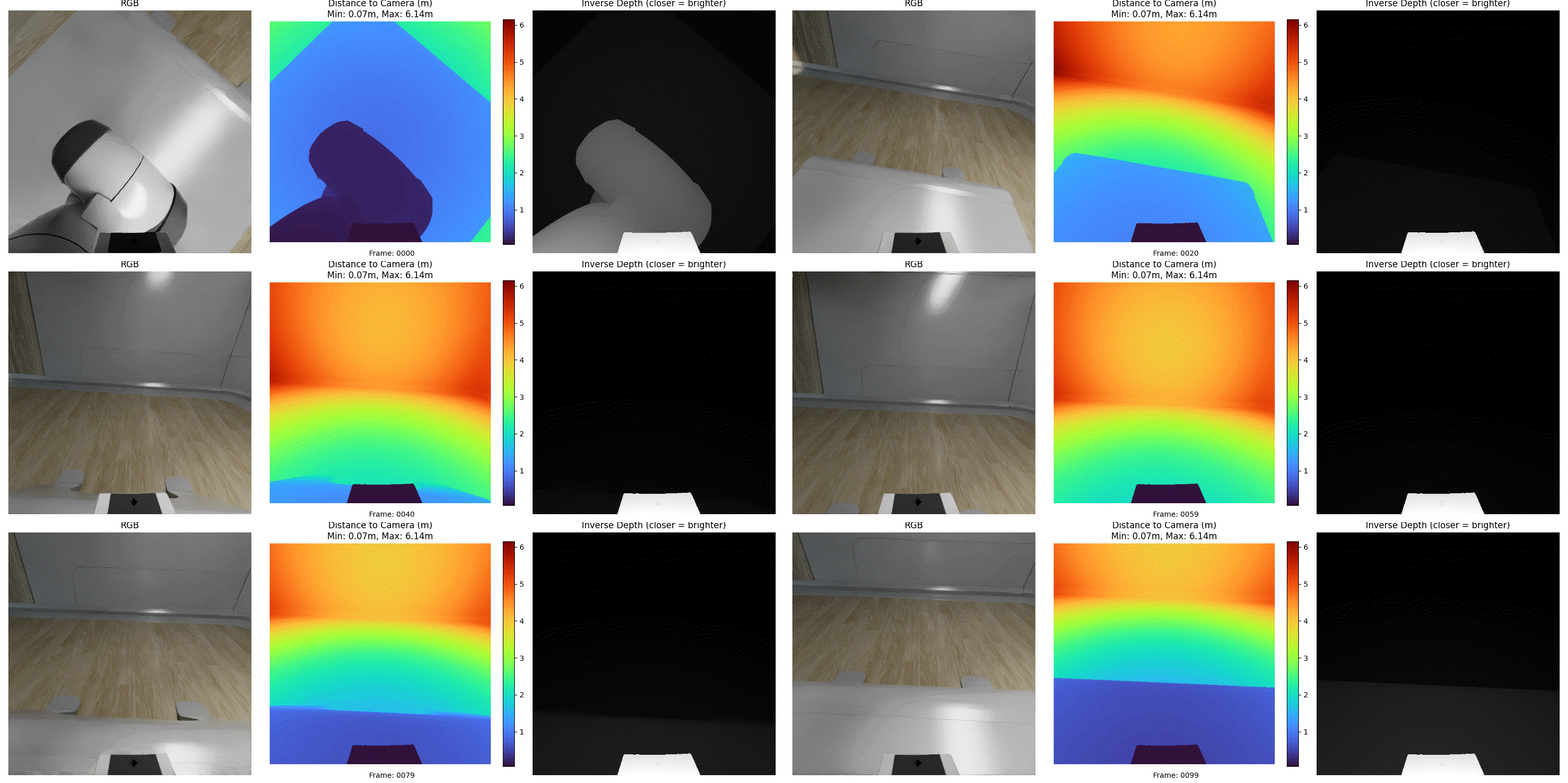
With native Luxonis camera support, that work is already done.
Developers can now:
- Instantly deploy Luxonis cameras in Isaac Sim projects
- Use sensor models that match real-world camera specifications
- Experiment with different camera placements and mounting positions
- Compare camera configurations and field-of-view (FOV) options
- Validate perception pipelines before hardware deployment
- Rapidly iterate on robot designs and sensor layouts
The result is a significantly faster path from concept to deployment.
Unlocking Synthetic Data Generation
One of the most powerful advantages of simulation is the ability to generate large amounts of synthetic data for AI training and validation.

By combining Luxonis cameras with NVIDIA Replicator, developers can generate high-quality synthetic datasets using the same camera configurations they intend to deploy in the real world. This creates a more seamless workflow between simulation, model training, and physical deployment.
Teams can efficiently produce datasets for:
- Object detection
- Segmentation
- Pose estimation
- Navigation and localization
- Robotic manipulation
- Custom AI perception tasks
Seamless Integration for Existing Isaac Users
For customers already using NVIDIA Isaac Sim or Isaac Lab, Luxonis camera support is available out of the box.
Instead of spending time recreating sensor specifications and validating camera models, developers can focus on what matters most: building, testing, and improving their robotic systems.
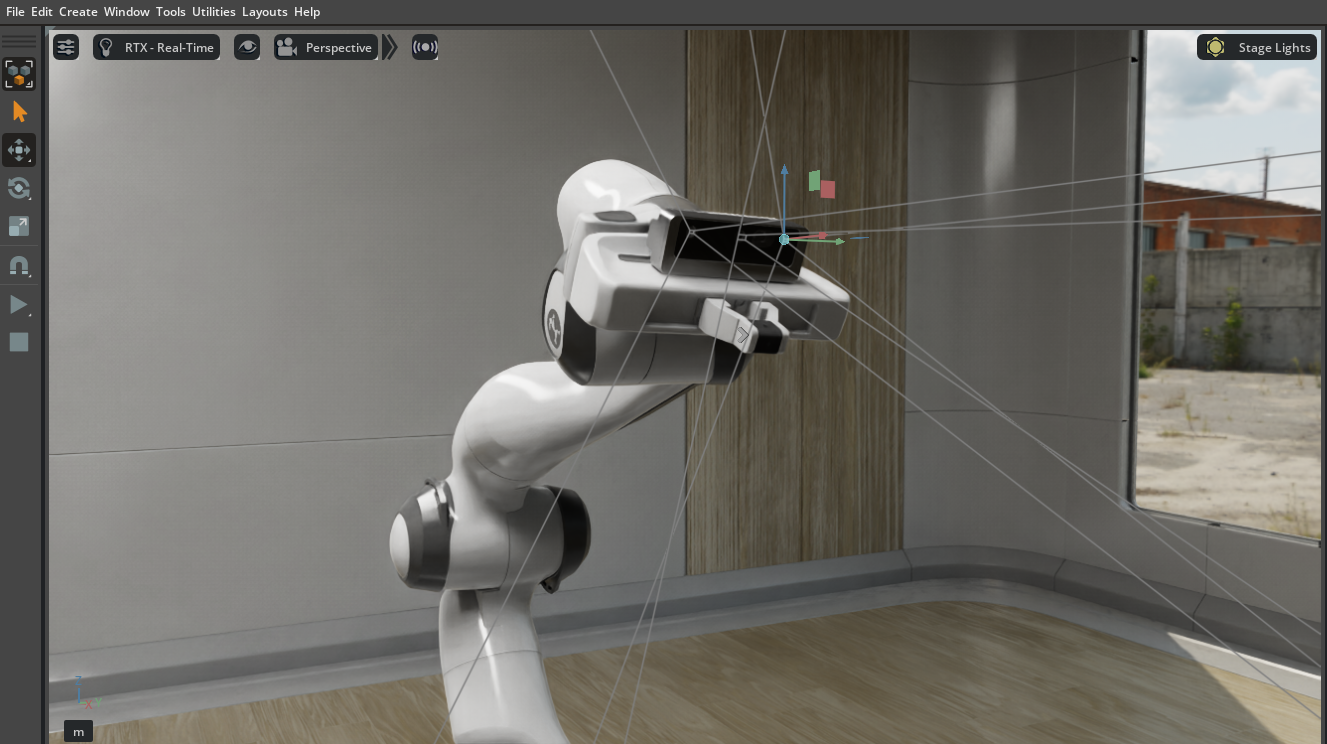
Whether you're developing autonomous mobile robots, industrial automation solutions, warehouse systems, drones, or research platforms, Luxonis cameras can now be integrated directly into your simulation workflow with minimal effort.
Accelerating Robotics Innovation
At Luxonis, our goal is to make vision and spatial AI development as accessible and efficient as possible. Official support within NVIDIA Isaac Sim is another step toward reducing friction between simulation and deployment, allowing robotics teams to iterate faster, test more thoroughly, and bring products to market sooner.
We're excited to see what the robotics community builds with Luxonis cameras in Isaac Sim.