Traditional agriculture relies heavily on blanket chemical spraying and manual labor. But with rising input costs, tighter environmental regulations, and severe labor shortages, farmers need a smarter way to manage their fields.
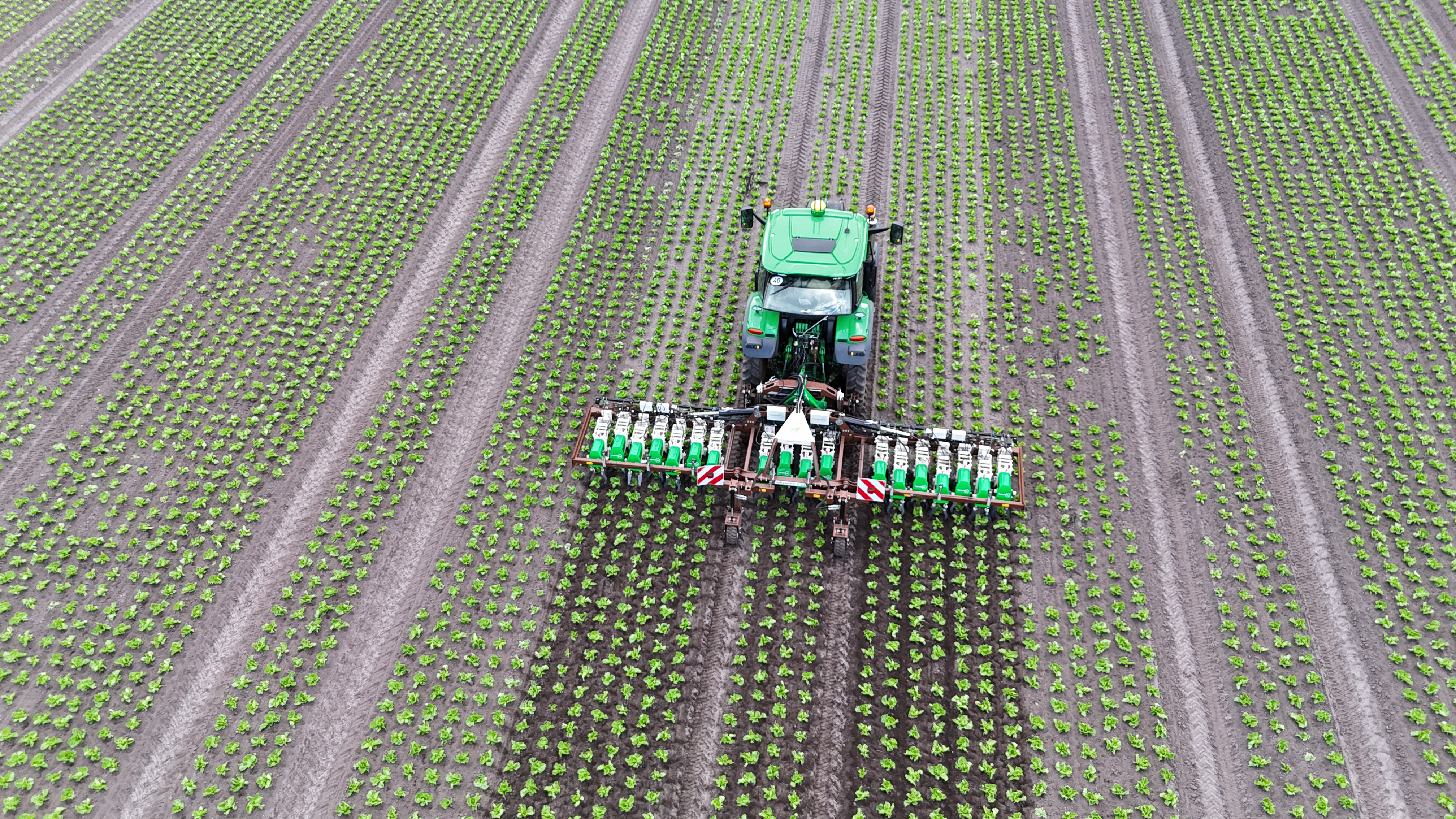
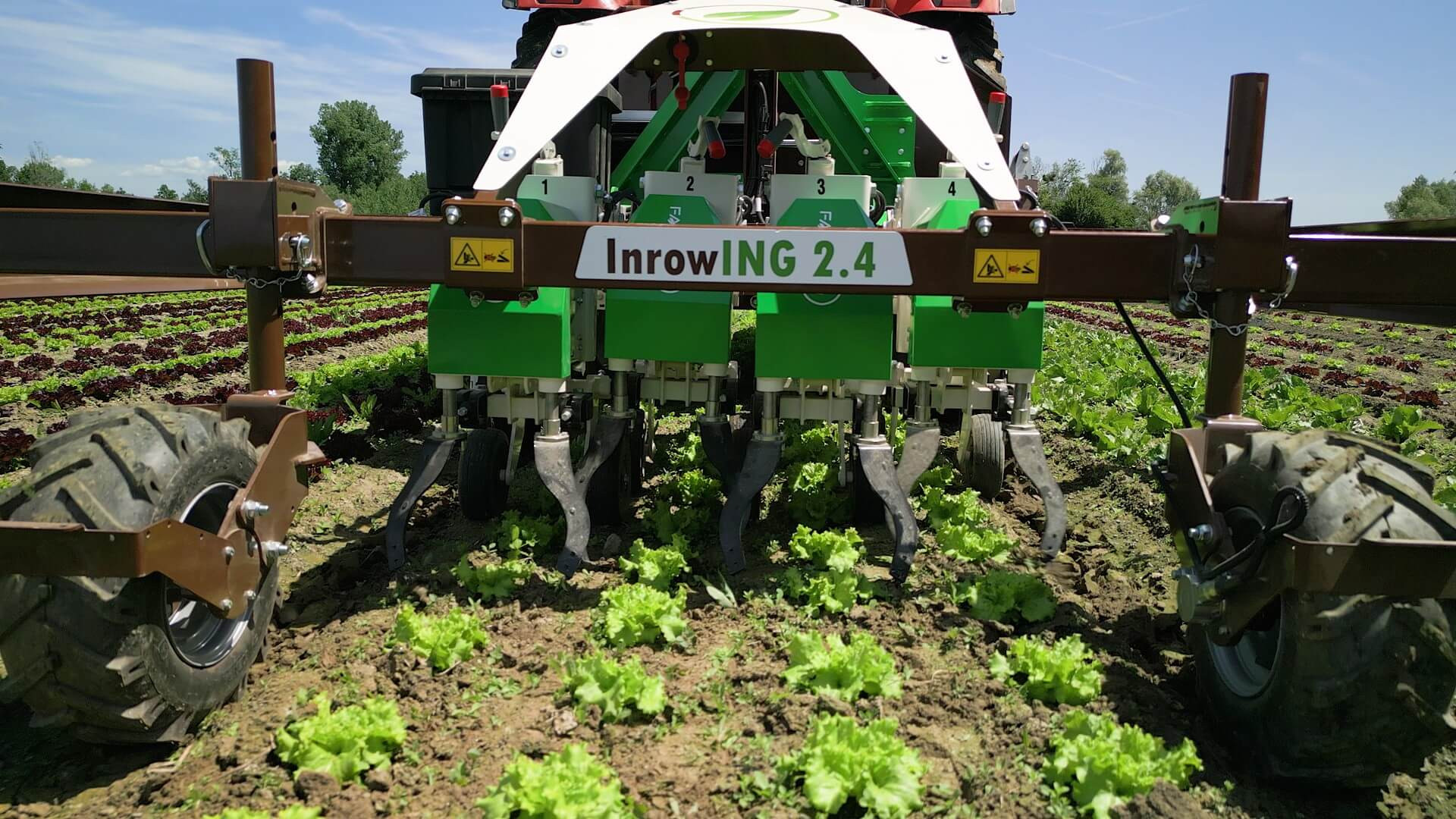
Farm-ING is solving this by developing high-precision weeding solutions, including in-row mechanical weeders, spot sprayers, and future laser weeding systems. By integrating Luxonis OAK cameras directly into their agricultural implements, they are turning raw image data into real-time, plant-level actuation, dramatically reducing chemical usage and making precision farming practical at scale.
The Mission
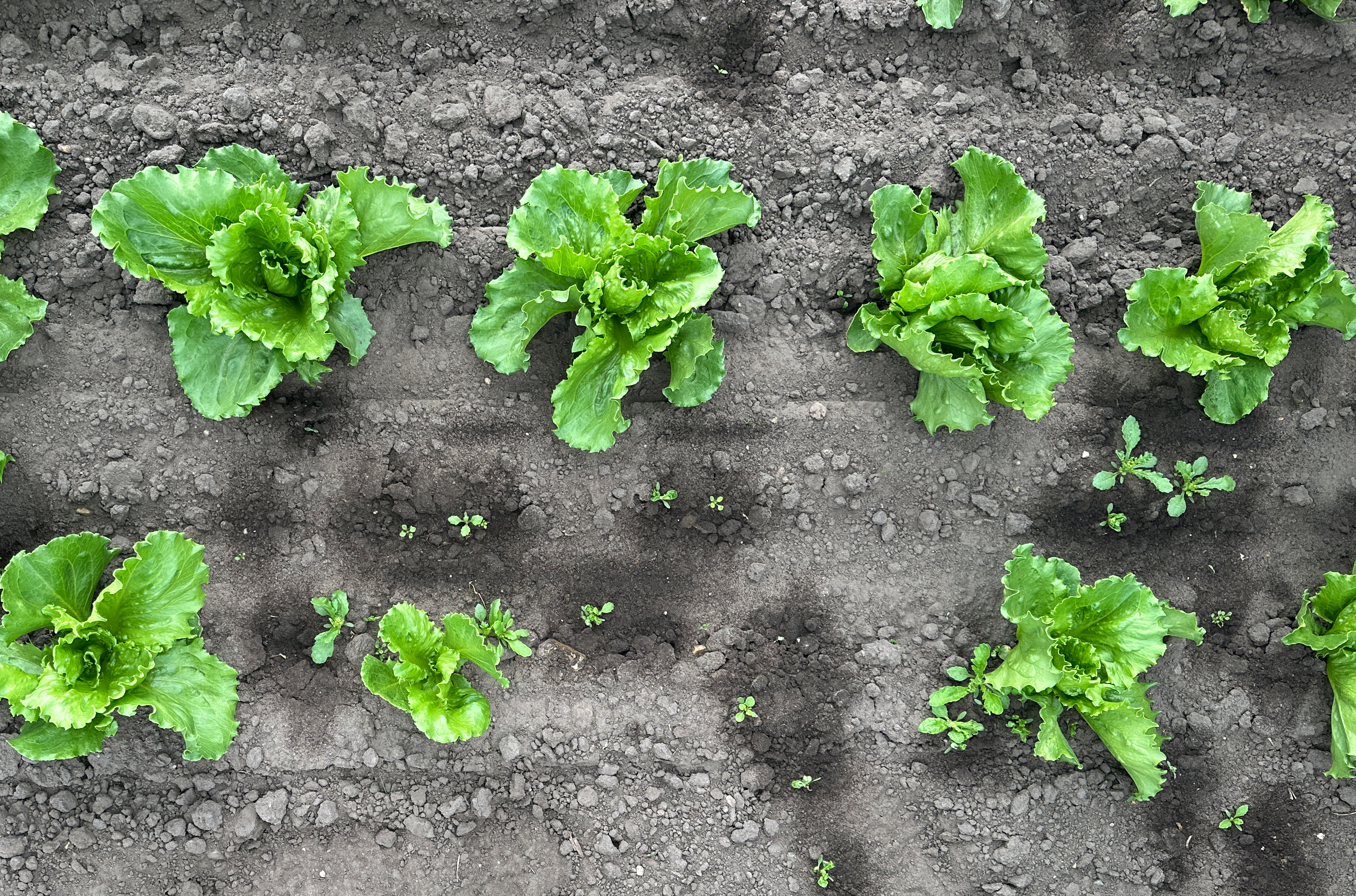
Farm-ING’s goal is to protect crop yields and reduce energy consumption while minimizing agriculture's reliance on blanket chemicals. To achieve this, their machines need to perceive the environment at the individual plant level, triggering intervention only exactly where it is truly needed.
Vision Challenges in the Field
Deploying computer vision in agriculture introduces extreme environmental variables. The perception system must overcome:
Harsh Environments: The hardware must survive intense outdoor lighting, heavy dust, moving foliage, and continuous machine vibration.
High-Speed Processing: The system needs to combine high resolution with high frame rates to make accurate decisions at real operating speeds.
Form Factor: The platform must remain compact, energy-efficient, and highly reliable for long working days in the dirt.
The Solution: Built with OAK
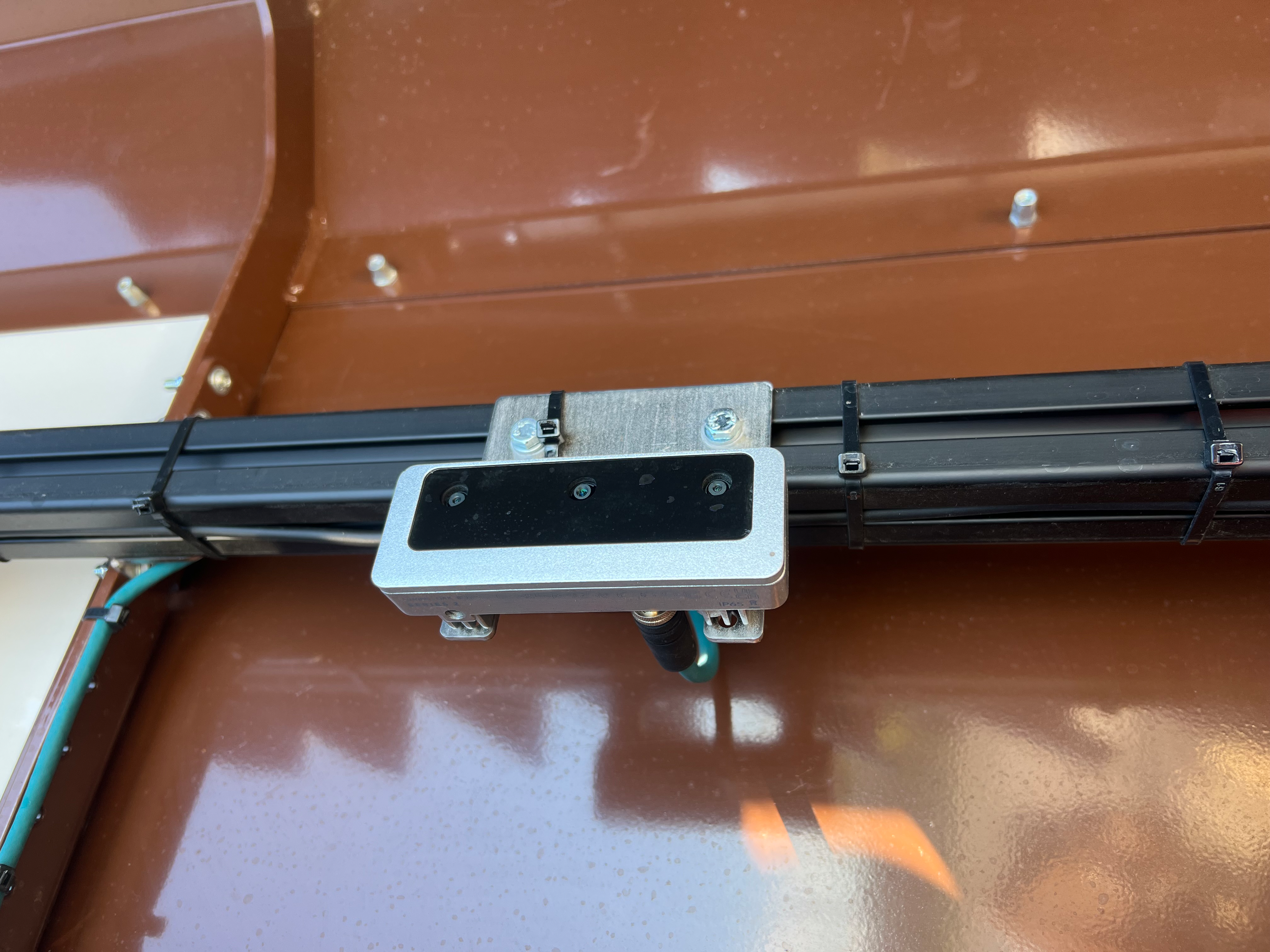
To build a reliable perception pipeline, Farm-ING integrated Luxonis OAK-D S2 PoE cameras directly into its implementation architecture.
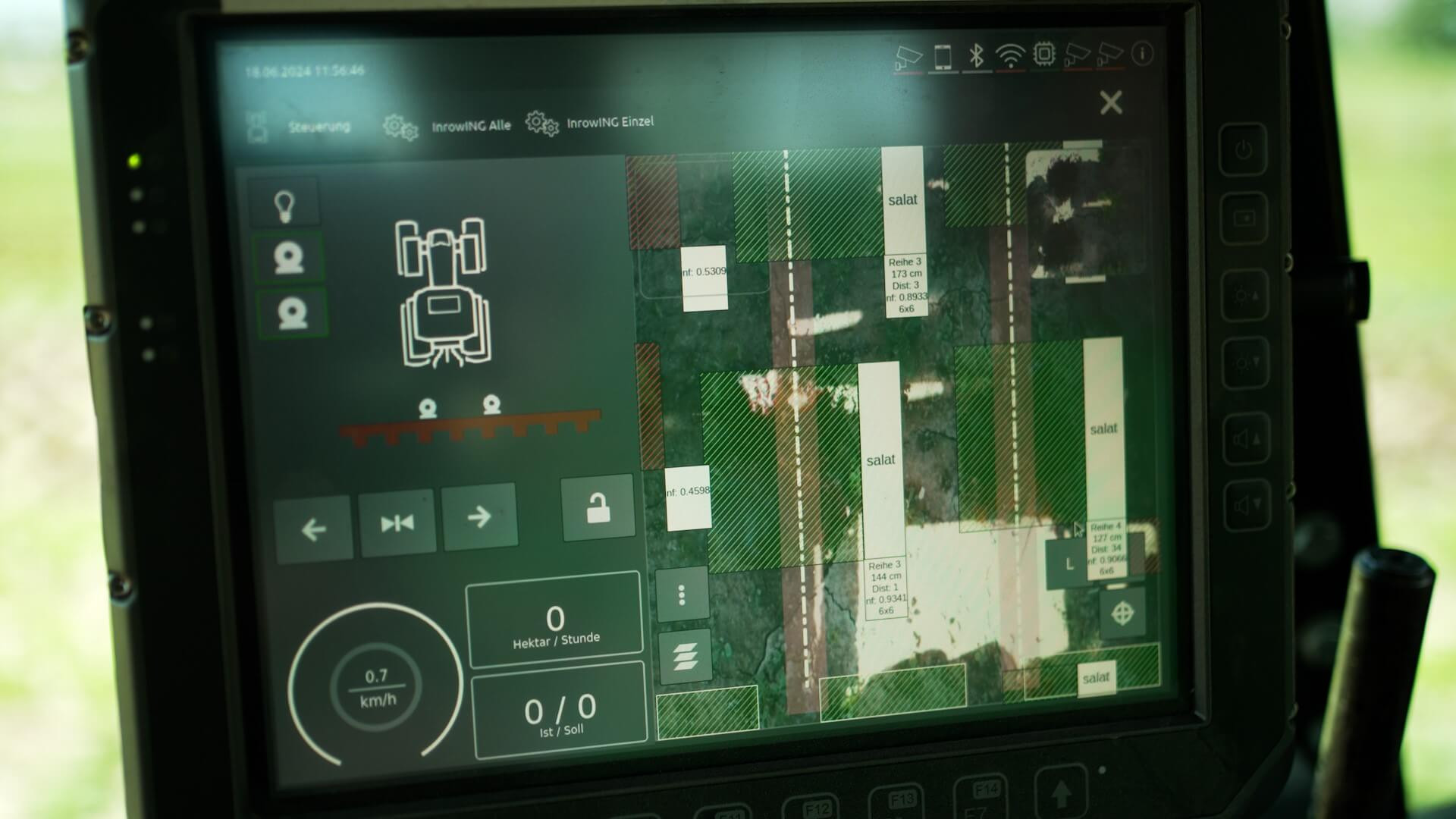
OAK cameras are mounted above the crop-row sections. Each section uses its own dedicated OAK unit to monitor a defined working zone and make local, real-time perception decisions. By running AI inference on-device, the system detects and classifies individual plants instantaneously, significantly reducing latency and bandwidth requirements. From there, Farm-ING’s solutions take over precise crop manipulations like in-row mechanical weeders, spot sprayers, and a future laser weeding syste
Why Farm-ING Chose Luxonis
Farm-ING needed an out-of-the-box solution so they wouldn't have to build and maintain a custom vision stack from scratch. They chose the Luxonis OAK-D S2 PoE because it delivers RGB imaging, depth sensing, and edge inference in a single, well-integrated module. This off-the-shelf reliability allows their engineering team to focus entirely on their core intellectual property: weed detection, timing, and mechanical actuation.
Compact & Efficient Integration: The camera features a highly compact and energy-efficient design that drops seamlessly into Farm-ING's modular system architecture, combining easily with their functional blocks for control and actuation.
On-Device Processing: By running AI inference directly on the hardware, the system can handle high-resolution imagery at high frame rates. This reduces latency and bandwidth requirements, keeping both initial development and field setup incredibly simple.
Rapid Development: The DepthAI pipeline and software tooling made it much faster to test, improve, and deploy new models.
Rugged Reliability: The IP-rated module is perfectly suited for the physical demands, dust, and vibration of outdoor agricultural machinery.
From Validation to the Dirt
Developing agricultural hardware requires rigorous real-world testing. Because the OAK platform provided a ready-made vision architecture, Farm-ING avoided rebuilding a vision stack from scratch and was able to move quickly and iterate cleanly through their validation timeline. Early work focused on collecting image data, training initial models, and validating inference speed and accuracy on bench setups. The system was then stressed under more realistic lighting and environmental conditions during greenhouse and yard trials. Once those baselines were established, multiple OAK units were mounted on test machines and evaluated in the field over full working days to verify hit rate, robustness, and latency. Finally, once the architecture proved stable in the dirt, the integration was mechanically and electrically hardened for pre-series equipment.
Scaling the Future of Agriculture
Luxonis proved to be a reliable technology foundation across the broader Farm-ING product family. Because of the dependable on-device inference, open SDK, and responsive technical support, Farm-ING can reuse the exact same vision foundation across spot spraying, in-row weeding, and future laser weeding platforms.
This consistency reduces engineering complexity, accelerates development, and supports a scalable product roadmap. Moving forward, Farm-ING is focused on scaling across Europe, with strong interest in bringing their technology to the US market and other key row-crop regions worldwide this year.
“Luxonis OAK was one piece that turned our machines into robust, field-ready weeding systems. The combination of on-device inference, depth sensing, and an open SDK lets us deliver high-precision weed control across different implements and crops—without building and maintaining our own vision hardware platform.”
— Farm-ING
Resources: