Deploying computer vision systems in remote locations often means dealing with limited or nonexistent power and connectivity. In this post, we’ll walk through a working, real‑world example of an off‑grid, solar‑powered OAK4-D setup that can run continuously for days without sunlight and reliably stream data over a cellular connection.
This setup is practical, modular, and well‑suited for field deployments such as environmental monitoring, smart agriculture, construction sites, or research installations far from traditional infrastructure.
Design Goals
Before diving into hardware, let’s define the core requirements:
- Completely off‑grid: No mains power required
- Long autonomy: Survive multiple cloudy days
- Stable power delivery for OAK4-D via PoE+
- Remote connectivity over 4G (with an easy path to satellite)
- Rugged and modular: Easy to adapt for different environments
Power System
Battery & Solar
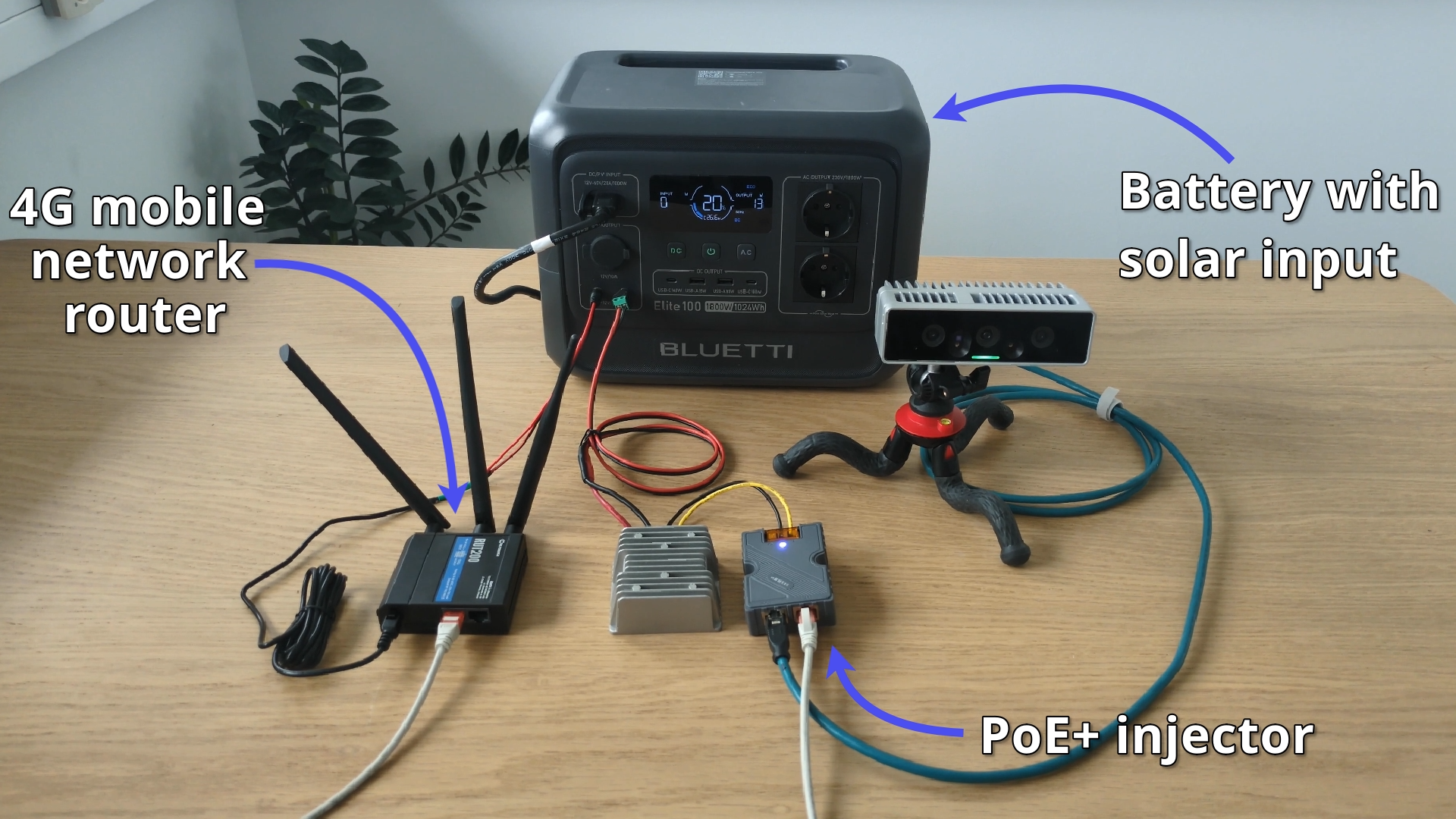
At the heart of the system is a portable solar power station with integrated battery management: 1 kWh battery with 100 W solar panel Bluetti Elite 100 V2.
This unit provides:
- Enough stored energy to keep the system running up to ~60 hours without sun (estimated with camera on lowest power consumption)
- Integrated solar charging and protection circuitry
- Multiple DC and AC outputs, simplifying wiring
- Automated power-on when solar energy is again available
- Quick setup and possibility of use in other projects
In real‑world testing, this capacity comfortably covers several overcast days, making it ideal for unattended deployments.
Powering the OAK4-D
The OAK4-D is powered via Power‑over‑Ethernet, which simplifies cabling and improves reliability in outdoor installations. This is why we included a PoE+ Injector.
The injector is powered from the DC output of the battery station and delivers stable PoE+ to the OAK4-D over a single Ethernet cable.
Benefits:
- Fewer connectors exposed to the environment
- Clean power delivery
- Easy separation between compute, power, and networking
Connectivity
4G Router
For remote data access and control, we use an industrial‑grade LTE router: Teltonika RUT200 LTE Cat4 Router
Why this router?
- Designed for industrial and outdoor deployments
- Low power consumption
- Easy VPN and remote management support
External LTE Antenna
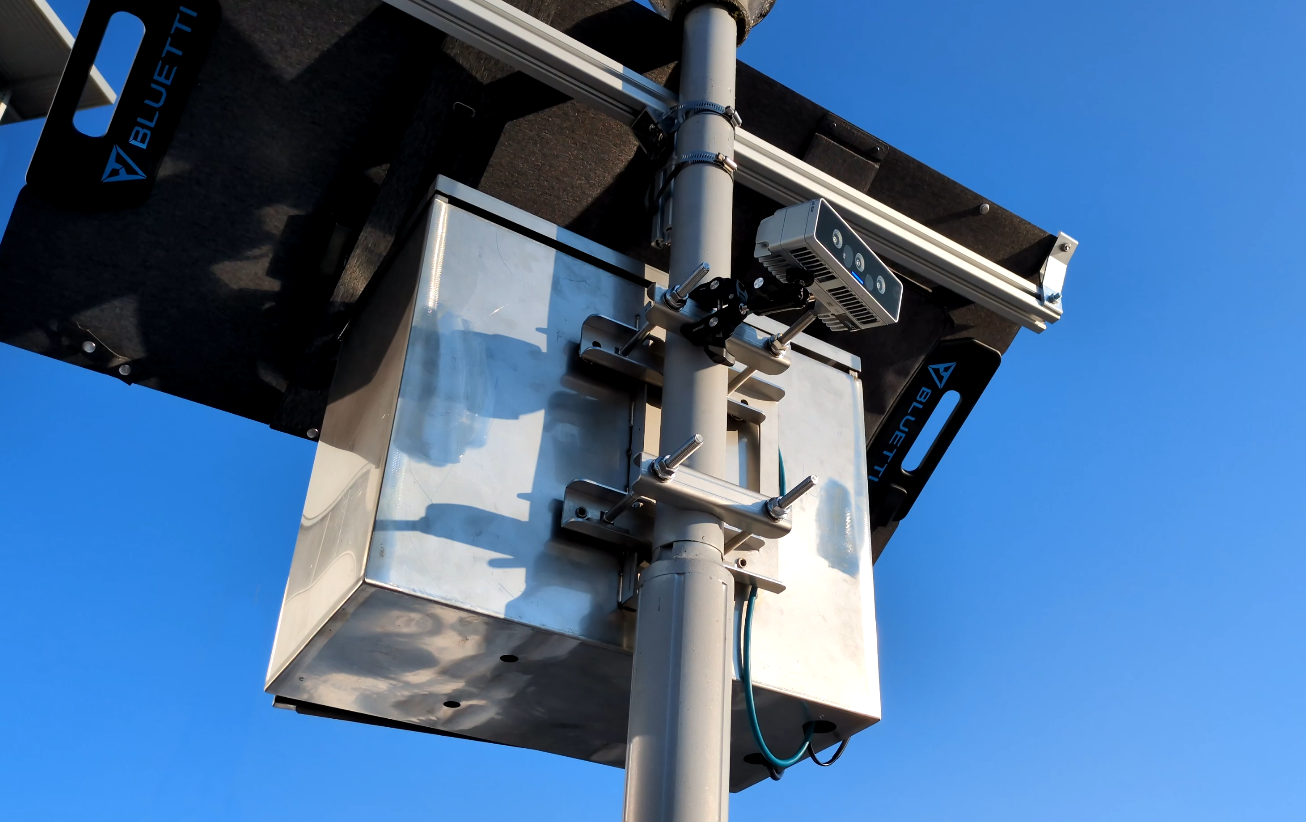
To ensure reliable connectivity even in weak‑signal areas, an external antenna is essential. We chose LTE Outdoor Antenna (IP67).
Mounted outside the enclosure, this antenna significantly improves signal strength and connection stability.
Power Cabling
Reliable DC cabling is critical in off‑grid systems.
- 4‑pin power cable for the 4G router
- DC power cables (barrel connectors)
These cables make it easy to:
- Distribute DC power cleanly
- Avoid inefficient AC conversions
- Customize cable lengths for enclosure layouts
Bill of Materials (BOM)
System Autonomy
With the above components, the system demonstrates:
- Up to 60 hours of runtime without solar input
- Continuous operation through multiple cloudy days
- Automatic recovery once sunlight returns
This makes it well‑suited for unattended, long‑term deployments where physical access is limited.
Remote & Future‑Proof
While this example uses 4G LTE, the architecture is intentionally flexible:
- The 4G router can be replaced or augmented with satellite communication (e.g. Starlink) if cellular coverage is unavailable
- Power and networking are decoupled, making upgrades straightforward
This ensures the same core design works whether your deployment is in farmland, mountains, offshore, or deep wilderness.
Final Thoughts
This off‑grid, solar‑powered OAK4-D setup proves that advanced edge AI doesn’t need a power outlet or wired internet. With the right components, you can deploy reliable, long‑running vision systems almost anywhere.
If you’re planning a remote deployment and need:
- Long‑term autonomy
- Clean PoE power for OAK4-D
- Reliable remote connectivity
…this architecture is a solid, field‑tested starting point.