OAK4 is built for deployment in the real world, not protected lab environments. That means surviving constant vibration, sudden impacts, extreme temperatures, and high humidity in places like factories, construction sites, agricultural equipment, mobile robots, and drones.
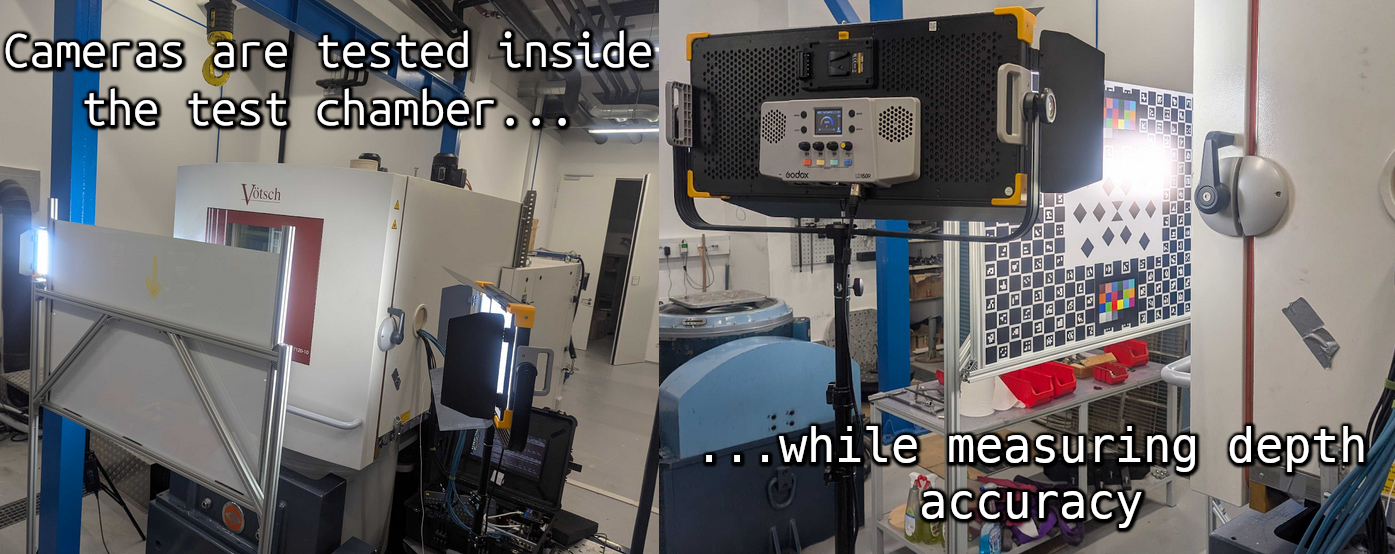
To validate that durability, both OAK4-D and OAK4-S were put through a full round of climate (IEC6006), vibration and mechanical shock testing (ISO19014). This testing represents the final validation step before mass production and is designed to expose weaknesses that only appear under sustained, real-world stress.
The result: OAK4 passed. The mechanical design held up, performance remained stable, and the devices maintained calibration throughout testing, confirming that OAK4 is ready for long-term use in harsh environments.

How We Tested
We didn’t just check if the cameras could survive sitting still on a desk—we pushed them to the kinds of limits they might face in the real world:
1. Temperature endurance
Cameras were placed in an environmental chamber cycling between -20°C and +50°C.
Humidity stayed at a challenging 93% to simulate harsh, moisture-heavy environments.
2. Vibration torture
We used vibration profiles ranging from 10 Hz to 2000 Hz.
The severity matched Level 3 standards (as per ISO 19014) - comparable to what you’d find on excavators, backhoes, and construction loaders.
These tests simulate the sustained shaking and jolting that can happen in industrial or field deployments.
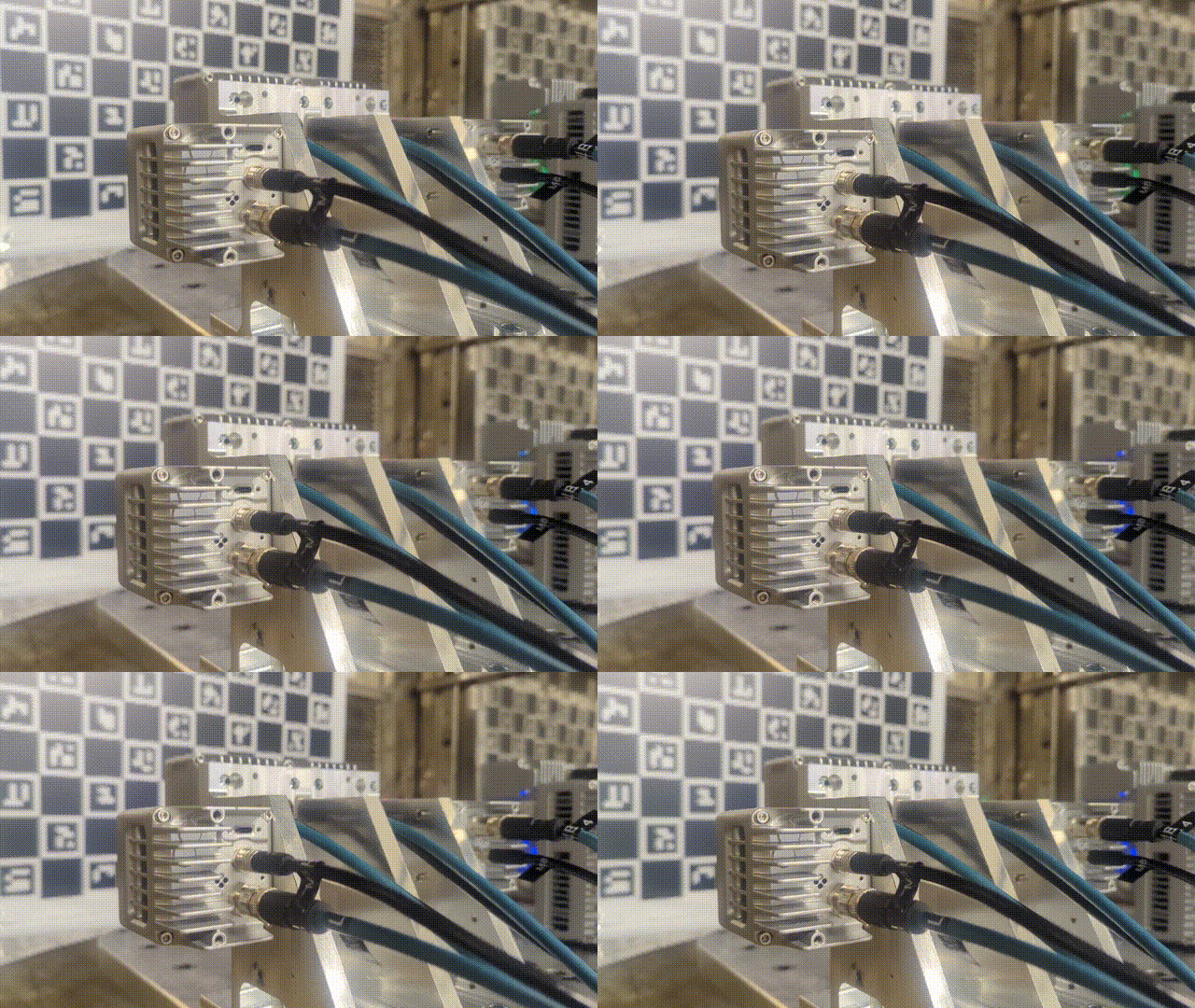
3. Mechanical shock

Did This Affect Camera Performance?
In every test cycle—even after all that heat, cold, moisture, shaking, and mechanical shock—the depth sensing stayed accurate and within spec. Calibration (basically how the camera “knows” where everything is) also held perfectly, even after we completely took the cameras apart and put them back together.
We also inspected the internal components after disassembly, and found no signs of damage or wear—everything remained firmly in place and fully functional. Notably, the cameras held calibration even after repeated disassembly and reassembly, reinforcing that we have a solid mounting base for CCMs.
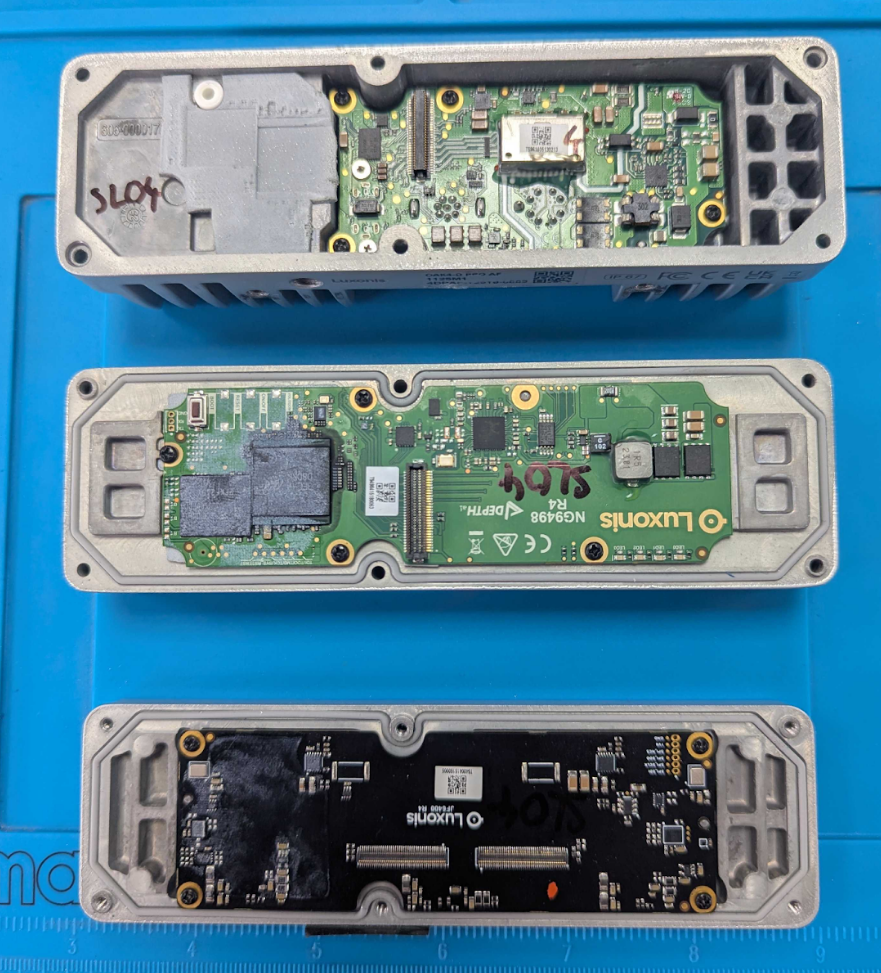
This tells us the design is not only vibration-resistant but also built to stay precise and durable in the real world.
What Was Going Wrong?
In earlier tests, we discovered that heavy vibrations—like those from drones, vehicles, or industrial machines—could cause three main problems:
Small parts shaking loose
- Things like capacitors and inductors were coming off the circuit board.
- Fix: We now glue these components down so they stay put.
Wobbly circuit board in OAK4-D
The board wasn’t fully supported, which added stress in certain spots.
Fix: Added an extra screw for extra stability.
Cable rubbing in OAK4-S
What’s Next?
This was a pre-compliance test, which means we’ve confirmed our fixes in the lab. The real confirmation will come when the first production units arrive, and we put them through the same tough testing.
In short: The OAK4-D and OAK4-S are now tougher, more stable, and ready for action—whether they’re mounted on a drone, bolted to a robot, or installed in a busy factory.